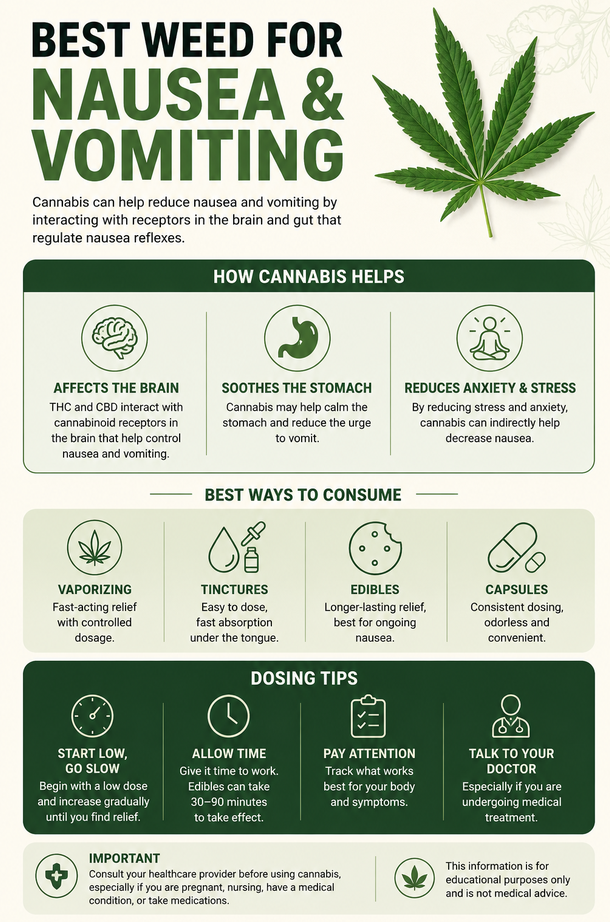
Finding the right Best weed for nausea and vomiting can be a consideration for adults who use cannabis and are looking for potential symptom relief. Nausea and vomiting can interfere with eating, sleeping, working, and everyday activities, and they can occur for many different reasons, including medical treatments, medication side effects, digestive problems, and other health conditions. While cannabis is not a guaranteed treatment and affects everyone differently, certain cannabis strains and cannabinoid profiles are commonly discussed for their potential anti-nausea effects.
So, what is the best weed for nausea and vomiting?

There is no single strain that works for everyone. Cannabis affects people differently, and factors such as cannabinoid content, terpene profile, individual tolerance, the cause of nausea, and consumption method can all influence the experience. Nevertheless, several cannabis strains are commonly discussed by consumers when looking for potential nausea relief.
It is also important to distinguish between anecdotal reports about cannabis flower and clinically studied cannabinoid medicines. Certain cannabinoid medications have been approved for specific medical uses involving chemotherapy-induced nausea and vomiting. Therefore, anyone considering cannabis for a medical condition should discuss the option with an appropriate healthcare professional.
With that in mind, let’s explore some of the cannabis strains commonly associated with nausea relief.
What Makes Weed Potentially Helpful for Nausea?
Cannabis contains cannabinoids such as THC and CBD that interact with the body’s endocannabinoid system. This system plays a role in several physiological processes, including appetite, pain perception, and gastrointestinal function.
In particular, THC has been studied for its antiemetic effects. Clinical research supports the use of certain cannabinoid medicines for chemotherapy-induced nausea and vomiting. However, that evidence does not automatically mean that every cannabis strain will work in the same way.
Furthermore, cannabis contains aromatic compounds called terpenes. Compounds such as limonene, myrcene, caryophyllene, linalool, and terpinolene contribute to the characteristics of different strains.
Consequently, consumers often look beyond THC percentage when comparing cannabis for nausea. A product’s overall cannabinoid and terpene profile may provide more useful information than a strain name alone.
Best Weed for Nausea and Vomiting: Strains to Consider
Wedding Cake
Wedding Cake is an indica-dominant hybrid frequently discussed among cannabis consumers looking for relief from nausea and stomach discomfort.
Its profile commonly includes caryophyllene, limonene, and myrcene. These compounds contribute to its distinctive aroma and relaxing character.
Because Wedding Cake can be relatively potent, it may appeal more to experienced consumers. Its relaxing effects can also make it more appropriate for evening use than for situations where alertness is important.
For people whose nausea occurs alongside stress, discomfort, or appetite changes, Wedding Cake is one strain worth researching.
Jack Herer
Jack Herer offers a very different experience. Rather than being primarily associated with heavy sedation, this hybrid is commonly described as uplifting and energizing.
That characteristic may make it attractive for people who experience nausea together with fatigue or low mood. For daytime consumers, a more stimulating strain can sometimes feel preferable to a heavily sedating option.
Jack Herer’s cannabinoid and terpene profile can vary considerably between growers and products. Therefore, checking the laboratory information on the specific product remains important.
GMO
GMO, sometimes called Garlic Cookies, is an indica-dominant strain known for its strong aroma and high THC potential.
Consumers often associate GMO with deep physical relaxation. As a result, it may be considered when nausea occurs alongside tension, discomfort, or difficulty sleeping.
However, higher THC products can also produce unwanted effects, particularly for people who are inexperienced with cannabis. Those effects can include dizziness, anxiety, sedation, and impaired coordination.
Therefore, potency should always be considered alongside the reason someone is using cannabis.
Sour Diesel
Sour Diesel is a sativa-dominant strain traditionally associated with an energetic and stimulating experience.
Some consumers consider it a useful option when nausea occurs alongside tiredness or appetite loss. Its commonly reported terpene profile includes caryophyllene, limonene, and myrcene.
Because individual reactions can vary, Sour Diesel may not be comfortable for everyone. People who are sensitive to stimulating cannabis effects may prefer to discuss alternatives with a healthcare professional.
Durban Poison
Durban Poison is another strain commonly associated with an alert, focused experience.
For consumers who want to remain active during the day, its stimulating character can make it an appealing option to investigate. Some cannabis users also associate it with appetite stimulation and relief from stomach discomfort.
However, an energizing cannabis product may not suit someone who experiences anxiety, restlessness, or sleep difficulties. Again, the specific chemical profile of the product matters more than the strain name alone.
Headband
Headband is an indica-dominant hybrid commonly associated with relaxation.
Its terpene profile often includes myrcene, limonene, and caryophyllene, while its THC content can be relatively high depending on cultivation and processing.
Because of its relaxing character, Headband is often considered more suitable for evening use. Someone dealing with nausea that makes it difficult to relax or sleep may find this profile worth discussing with a qualified healthcare provider.
Lavender
Lavender is another cannabis strain that attracts attention because of its relaxing characteristics.
Linalool is one of its commonly associated terpenes. The same compound occurs naturally in plants such as lavender and contributes to the strain’s floral aroma.
For consumers who experience nausea together with stress or tension, Lavender may therefore be an interesting strain to research. However, THC concentrations can vary, and stronger products can produce significant psychoactive effects.
Blue Dream
Blue Dream remains one of the better-known cannabis hybrids and is frequently discussed in relation to nausea and appetite.
Its commonly reported terpene profile includes myrcene, pinene, and caryophyllene. Many consumers appreciate its balance between physical and cerebral effects.
Because products sold under the same strain name can have different cannabinoid and terpene concentrations, consumers should examine the actual product label rather than assuming every Blue Dream product has the same composition.
THC vs. CBD for Nausea
When searching for the best weed for nausea and vomiting, THC often receives the most attention because cannabinoids containing THC have demonstrated antiemetic effects in clinical research.
CBD, meanwhile, does not produce the same intoxicating effects as THC. Although researchers continue to investigate CBD for numerous potential applications, the evidence for CBD alone as a treatment for nausea is not as established as the evidence supporting certain THC-based medicines for chemotherapy-induced nausea and vomiting.
Therefore, consumers should avoid assuming that a higher CBD percentage automatically makes a product better for nausea.
Instead, consider the entire cannabinoid profile, the underlying cause of the nausea, other medications being taken, and individual sensitivity to cannabis.
Indica or Sativa: Which Is Better for Nausea?
There is no scientifically established rule that indica is always better for nausea or that sativa is always better.
The traditional indica-versus-sativa labels can provide a rough description of a product’s expected characteristics, but they do not fully describe its chemical composition.
For example, two products with the same strain name may have noticeably different THC, CBD, minor cannabinoid, and terpene concentrations.
Therefore, when choosing cannabis for nausea, looking at the laboratory-tested cannabinoid and terpene profile can be more informative than relying exclusively on the indica or sativa label.
Cannabis and Chemotherapy-Induced Nausea
One of the strongest areas of research involving cannabinoids and nausea concerns chemotherapy.
Cancer treatment can cause significant nausea and vomiting, and cannabinoid medicines have been studied extensively in this setting. Dronabinol and nabilone are FDA-approved cannabinoid medicines for chemotherapy-induced nausea and vomiting in specific circumstances.
However, cannabis flower should not automatically be considered equivalent to an approved pharmaceutical cannabinoid.
Current clinical guidance also emphasizes that cannabis products do not have sufficient evidence to replace established antiemetic treatment for chemotherapy-related nausea.
Anyone undergoing chemotherapy should therefore speak with their oncology team before adding cannabis to their treatment plan.
Important Safety Considerations
Although cannabis may help some people with nausea, it can also cause unwanted effects.
For example, THC can cause dizziness, sedation, impaired coordination, anxiety, or changes in perception. These effects can become more significant with high-potency products.
More importantly, frequent long-term cannabis use can sometimes produce cannabinoid hyperemesis syndrome, or CHS. This condition causes recurrent nausea, vomiting, and abdominal discomfort. In people who develop CHS, continuing to consume cannabis can make symptoms worse.
Consequently, someone experiencing repeated or unexplained vomiting should not simply increase cannabis consumption. Persistent vomiting can cause dehydration and may indicate a condition requiring medical attention.
Seek urgent medical care for severe or persistent vomiting, signs of dehydration, blood in vomit, severe abdominal pain, confusion, fainting, or other concerning symptoms.
Best Weed for Nausea and Vomiting: How to Choose Cannabis for Nausea
Instead of focusing only on finding the highest-THC strain, consider several factors.
First, identify what may be causing the nausea. Nausea related to chemotherapy, medication, migraines, gastrointestinal conditions, pregnancy, infection, or another medical issue may require very different approaches.
Next, look at the laboratory-tested cannabinoid profile. THC, CBD, CBG, and other cannabinoids can vary significantly between products.
Then, consider terpene information where reliable laboratory testing is available. Limonene, caryophyllene, myrcene, linalool, and terpinolene are among the terpenes commonly encountered in cannabis products.
Finally, consider your own response to cannabis. A product that feels calming to one person could cause anxiety or dizziness in another.
Frequently Asked Questions
What is the best weed for nausea and vomiting?
There is no universally best strain. Wedding Cake, Jack Herer, GMO, Sour Diesel, Durban Poison, Headband, Lavender, and Blue Dream are among the strains commonly associated with nausea relief. However, individual responses vary, and clinical evidence is stronger for certain cannabinoid medicines than for specific cannabis strains.
Does THC help with nausea?
THC has demonstrated antiemetic effects, particularly in research involving chemotherapy-induced nausea and vomiting. However, THC can also cause side effects, so medical guidance is important when using cannabinoid products for a health condition.
Is CBD good for vomiting?
CBD is being studied for numerous potential effects, but it should not be assumed to provide the same antiemetic benefits as THC. Evidence supporting approved THC-based cannabinoid medicines for chemotherapy-related nausea is considerably stronger.
Is indica or sativa better for an upset stomach?
Neither category is automatically better. The cannabinoid and terpene profile, individual response, product potency, and cause of nausea all matter. Therefore, examining laboratory-tested product information can be more useful than relying solely on the indica or sativa label.
Can cannabis make nausea worse?
Yes. In some people, particularly with prolonged and frequent use, cannabis can contribute to cannabinoid hyperemesis syndrome. CHS can cause repeated nausea and vomiting, and stopping cannabis is the key treatment.
Can I use cannabis instead of anti-nausea medication?
Cannabis should not automatically replace prescribed anti-nausea medication. This is especially important for people receiving chemotherapy or managing a significant medical condition. Discuss cannabis use with a qualified healthcare professional before changing an established treatment plan.
Final Thoughts
Finding the best weed for nausea and vomiting requires more than choosing a popular strain or the highest THC percentage. Wedding Cake, Jack Herer, GMO, Sour Diesel, Durban Poison, Headband, Lavender, and Blue Dream all have characteristics that may appeal to different consumers. Nevertheless, individual reactions vary considerably.
Most importantly, cannabis should be approached as one potential option rather than a universal cure. Understanding the cause of nausea, checking laboratory-tested cannabinoid information, considering terpene profiles, and discussing cannabis use with a healthcare professional can help consumers make more informed decisions.
For consumers in jurisdictions where cannabis products are legally available, Earthy420 is an online source where consumers can access the strains mentioned above, with product information clearly outlined to make it easier to compare available options and understand what each product contains. Consumers should always verify local laws, product testing, cannabinoid content, and applicable medical guidance before purchasing or using cannabis.
For further reading on cannabis strains commonly discussed for nausea relief, see Leafwell’s “Best Strains for Nausea Relief”