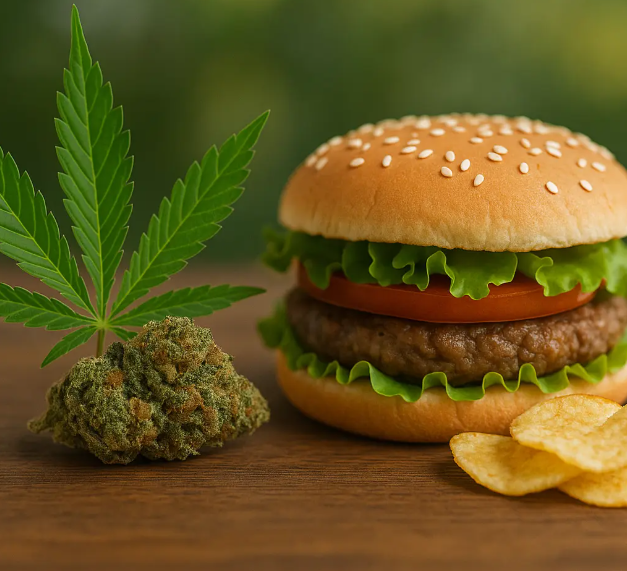
For people searching for weed for appetite, certain cannabis strains have developed a strong reputation for stimulating hunger and bringing on the familiar “munchies.” While cannabis affects everyone differently, THC is widely associated with increased appetite, and some consumers specifically look for THC-rich strains when they want a more food-focused experience.
In particular, strains such as OG Kush, Girl Scout Cookies (GSC), Gorilla Glue (GG4), Royal Cookies, Sour Diesel, and Platinum Bubba Kush are frequently discussed in connection with appetite stimulation.
Utah Canna’s guide to the Best Cannabis Strains for Appetite Stimulation highlights several of these varieties, including OG Kush, Girl Scout Cookies, Gorilla Glue, Royal Cookies, Sour Diesel, and Platinum Bubba Kush. The guide also discusses factors such as THC, terpenes, consumption method, and individual tolerance when considering cannabis for appetite.
Similarly, Leafwell’s guide to the 8 Best Strains for Appetite features OG Kush, Girl Scout Cookies, and Royal Cookies.
Therefore, if you’re researching weed for appetite, these strains provide an interesting starting point. However, cannabis is not a guaranteed appetite stimulant, and the experience can vary depending on the product’s cannabinoid profile, potency, terpene content, tolerance, and individual response.
How Does Weed Affect Appetite?
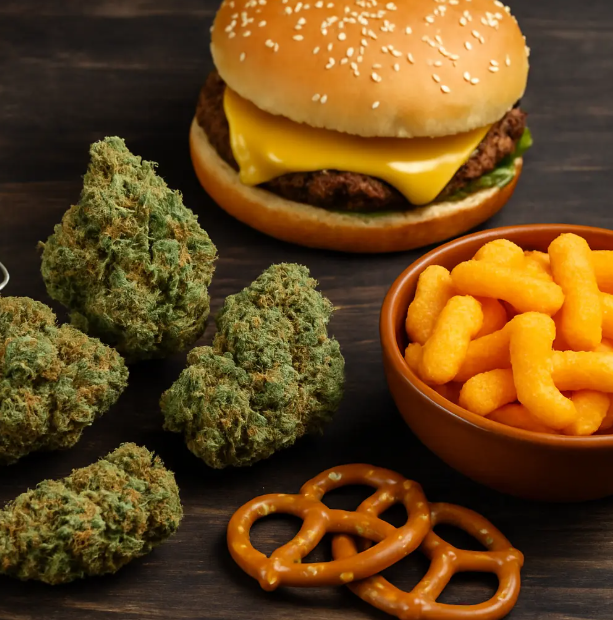
The relationship between cannabis and appetite is largely connected to THC, the primary intoxicating cannabinoid in marijuana.
When THC interacts with the body’s endocannabinoid system, it can influence pathways involved in hunger, reward, and food perception. Research discussed by Leafwell indicates that THC can increase ghrelin, a hormone associated with hunger, while also affecting brain pathways involved in appetite.
As a result, some people experience a noticeable increase in hunger after consuming THC-rich cannabis.
Moreover, cannabis may make food seem more appealing. Smell, taste, and the rewarding qualities of food can become more noticeable, which may contribute to the classic experience of getting the “munchies.”
However, not every cannabis product produces the same response. Cannabinoid and terpene profiles differ considerably between strains and products. Additionally, compounds such as THCV have been associated with appetite suppression, meaning that simply choosing something labeled “sativa” or “indica” is not enough to predict the effect.
For that reason, consumers researching weed for appetite should pay attention to the actual laboratory-tested cannabinoid profile whenever that information is available.
What to Look for in Weed for Appetite
Earthy420 | Buy Medical & Recreational Cannabis Online
Looking for Cannabis for Appetite Stimulation ?
When comparing cannabis products for appetite, THC is one of the first characteristics consumers may want to consider.
Generally, the strains discussed in appetite-focused cannabis guides tend to be relatively THC-rich. Utah Canna specifically recommends looking for high-THC, low-THCV profiles when appetite stimulation is the goal.
Terpenes may also influence the overall experience. Myrcene, caryophyllene, and limonene frequently appear in discussions of appetite-oriented cannabis varieties.
Nevertheless, terpene content should not be treated as a guarantee of a particular effect. Two products carrying the same strain name can have different cannabinoid and terpene concentrations.
Appetite-focused strain comparison
| Strain | Reported THC range/content | General profile | Appetite reputation |
|---|---|---|---|
| OG Kush | About 18–25% | Indica-dominant hybrid | Strong appetite association |
| Girl Scout Cookies (GSC) | Up to about 27–28% | Indica-leaning hybrid | Strong |
| Gorilla Glue (GG4) | About 18–25%+ | Potent hybrid | Strong |
| Royal Cookies | Around 23–25% | Indica-dominant hybrid | Strong |
| Sour Diesel | Varies by product | Sativa-dominant | Moderate to strong |
| Platinum Bubba Kush | Around 4% in some CBD-dominant phenotypes | CBD-dominant/milder profile | Milder |
THC percentages are reported figures from published strain guides and can vary significantly between cultivars, growers, batches, and finished products. Always check the product’s current laboratory results rather than relying on a strain’s historical THC percentage.
1. OG Kush
OG Kush is one of the most recognizable cannabis strains and is frequently associated with relaxation, euphoria, and appetite stimulation.
Utah Canna describes OG Kush as an indica-dominant hybrid typically carrying approximately 18–25% THC, with myrcene, limonene, and caryophyllene among its notable terpenes.
Leafwell similarly includes OG Kush among its best strains for appetite and reports THC levels of up to approximately 20% in its strain overview.
Because OG Kush can be relaxing, it may appeal to consumers who want to combine appetite stimulation with an evening-oriented cannabis experience.
However, higher THC does not automatically mean a better appetite response. Some people may find potent products overwhelming, particularly if they have low tolerance.
2. Girl Scout Cookies (GSC)
Girl Scout Cookies, commonly abbreviated as GSC, is another popular option when researching weed for appetite.
Utah Canna describes GSC as an indica-leaning hybrid and notes that some varieties can test at approximately 27% THC. Its reported terpene profile can include caryophyllene, limonene, and myrcene.
Leafwell also lists GSC among its best strains for appetite, reporting a THC concentration of approximately 28% in its discussion.
This makes GSC particularly relevant to consumers interested in higher-potency cannabis.
At the same time, that potency means consumers should not assume that more is better. A high-THC product may produce stronger intoxicating effects, and excessive THC can be uncomfortable for some people.
3. Gorilla Glue (GG4)
Gorilla Glue, commonly known as GG4, is another potent hybrid frequently associated with appetite stimulation.
According to Utah Canna, GG4 typically falls around 18–25% THC or higher, although actual products can differ. The strain is known for a powerful, relaxing experience, which can make it particularly appealing for evening use.
For consumers searching for weed for appetite, GG4 may be worth researching because it combines substantial THC potency with a reputation for relaxation and hunger.
Nevertheless, its strength can also be a consideration. Consumers who are inexperienced with high-THC cannabis should pay close attention to the product label and avoid assuming that a historical strain percentage represents the product currently being sold.
4. Royal Cookies
Royal Cookies is an indica-dominant hybrid that has also earned a place on appetite-focused strain lists.
Utah Canna reports that Royal Cookies can reach approximately 23% THC, while Leafwell describes concentrations approaching 25% THC in its appetite guide.
The strain’s sweet profile and relatively high THC content make it an interesting option for consumers exploring cannabis varieties associated with increased hunger.
Furthermore, Royal Cookies appears on both Utah Canna’s appetite-stimulation list and Leafwell’s appetite guide. That overlap makes it particularly relevant when comparing recommendations from different cannabis resources.
Still, individual experiences vary. A strain that increases appetite for one consumer may produce primarily relaxation or intoxication for another.
5. Sour Diesel
Unlike several of the heavier indica-dominant varieties above, Sour Diesel is generally associated with a more energizing, cerebral cannabis experience.
Utah Canna includes Sour Diesel among strains discussed for appetite stimulation and notes its potential to encourage hunger without necessarily producing the same degree of sedation associated with heavier indica varieties.
Leafwell also discusses Sour Diesel as a sativa-dominant strain associated with appetite and nausea-related use, reporting a cannabinoid profile of approximately 18–26% THC in its nausea guide.
Consequently, Sour Diesel may be particularly interesting to people looking for weed for appetite while preferring a more alert or daytime-oriented profile.
However, the experience remains highly individual, and the specific product’s potency and terpene profile matter more than the strain name alone.
6. Platinum Bubba Kush
Platinum Bubba Kush provides an interesting contrast to the higher-THC strains on this list.
Utah Canna describes some CBD-dominant phenotypes of Platinum Bubba Kush as having approximately 4% THC, making them considerably milder than varieties such as GSC, GG4, or Royal Cookies.
This distinction is important because appetite stimulation does not necessarily require choosing the highest-THC product available.
For consumers who are particularly sensitive to THC, a lower-THC profile may be more appealing. However, consumers should verify the actual cannabinoid profile of the product they are considering because different phenotypes and products can vary.
Where to Find Weed for Appetite
Once you understand the characteristics of different strains, the next step is comparing actual products rather than relying solely on strain names.
For consumers looking to explore premium cannabis products, Earthy420 can be another place to browse some of these strains, where available, while also checking product specifications such as listed THC levels. This is particularly useful because the THC percentage associated with a strain in a general article may differ from the THC percentage in a specific flower, vape, or other cannabis product.
In other words, if a strain is traditionally described as having 25% THC, that does not mean every product carrying that strain name will contain exactly 25%. Checking the current product specifications and laboratory information is therefore important.
Choosing the Right Weed for Appetite
There is no universal “best” cannabis strain for appetite.
Instead, consider what type of experience you want alongside increased hunger.
For example, OG Kush, GSC, GG4, and Royal Cookies may appeal to consumers looking for stronger, relaxing experiences. By contrast, Sour Diesel may be more attractive to people who prefer an energetic or cerebral profile.
Meanwhile, Platinum Bubba Kush may be worth investigating for consumers who want a lower-THC option.
Additionally, consider the product’s cannabinoid profile. THC is strongly associated with the appetite-stimulating effects of cannabis, while THCV has been associated with appetite suppression.
Therefore, looking at the actual lab-tested cannabinoid profile can provide more useful information than simply choosing a product based on whether it is labeled indica, sativa, or hybrid.
Weed for Appetite and Appetite Loss
People search for weed for appetite for many different reasons.
Some may simply enjoy the increased hunger associated with cannabis. Others may be dealing with reduced appetite associated with illness, treatment, nausea, stress, or other circumstances.
If appetite loss is persistent or unexplained, however, cannabis should not replace medical evaluation. Loss of appetite can have many underlying causes, and treatment depends on what is causing it.
Cannabis-based medicines are also used in some medical contexts. Leafwell notes that synthetic THC medications such as dronabinol have been prescribed for appetite stimulation in certain medical situations.
Consequently, anyone considering cannabis specifically because of significant or ongoing appetite loss should discuss the situation with a qualified healthcare professional.
Final Thoughts
For consumers searching for weed for appetite, strains such as OG Kush, Girl Scout Cookies, Gorilla Glue (GG4), Royal Cookies, Sour Diesel, and Platinum Bubba Kush are worth researching.
Utah Canna highlights these varieties in its appetite-stimulation guide, while Leafwell’s appetite guide also features OG Kush, GSC, and Royal Cookies. These strains have developed strong reputations among consumers interested in appetite stimulation, although individual experiences can vary.
If you’re ready to explore some of these varieties, Earthy420 provides access to premium cannabis products while allowing consumers to compare product details such as THC levels and other specifications where available.
Ultimately, there is no universally best strain for appetite. THC concentration, terpene profile, tolerance, consumption method, product quality, and individual biology can all influence the experience. Therefore, checking the specifications of the actual product you’re considering is just as important as researching the strain itself.
By understanding these differences and choosing products responsibly, consumers can make more informed decisions when exploring cannabis strains associated with appetite and hunger.
Frequently Asked Questions About Weed for Appetite
Does weed increase appetite?
For many people, THC-containing cannabis can increase hunger and trigger the familiar “munchies.” THC interacts with the endocannabinoid system and can influence appetite-related pathways. However, individual responses vary.
What is the best weed for appetite?
There is no single best option for everyone. OG Kush, GSC, GG4, Royal Cookies, Sour Diesel, and Platinum Bubba Kush are among the strains discussed in appetite-focused cannabis resources.
What cannabis strains make you hungry?
High-THC varieties such as OG Kush, Girl Scout Cookies, Gorilla Glue, and Royal Cookies are commonly associated with appetite stimulation. Sour Diesel is another strain discussed in connection with appetite.
Is OG Kush good for appetite?
OG Kush is frequently associated with increased appetite and is included in both Utah Canna’s and Leafwell’s appetite-focused discussions. Reported THC levels vary, with published figures generally around 18–25% depending on the source and product.
Does Girl Scout Cookies make you hungry?
GSC is commonly associated with appetite stimulation and appears on Leafwell’s list of best strains for appetite. Some published descriptions report THC levels approaching 27–28%, although actual products can vary.
Is Sour Diesel good for appetite?
Sour Diesel is frequently discussed as an appetite-associated strain and may appeal to people who prefer a more energetic profile. Leafwell reports approximately 18–26% THC in one of its strain discussions, although actual products vary.
Does higher THC mean stronger appetite?
Not necessarily. THC is strongly associated with appetite stimulation, but the overall experience also depends on dose, tolerance, other cannabinoids, terpenes, and individual physiology. Therefore, the highest THC product is not automatically the best choice.
Can cannabis help with appetite loss?
Cannabis and cannabinoid-based medicines have been studied and used in certain medical contexts involving appetite loss. However, persistent appetite loss can have many causes and should be discussed with a healthcare professional rather than self-treated solely with cannabis.